In my first blog, I wrote about the need to bring the internal and external, the psychological and political, paths to freedom together. I’ll be writing about this in detail and breadth over the course of this series, including deep dives into the multiple crises of our time and the recent social science research that offers hope.
While climate change, global warfare, and the culture wars are urgent, when we go at them too directly, we risk becoming strident or zealous, which makes things worse. We do not have time for vitriol or outrage. So, I’m going to meander into a different feeling place and circle back to these.
I want to talk about belonging and how I do not think there’s any going forward without attending to its absence and the resulting epidemic of loneliness.
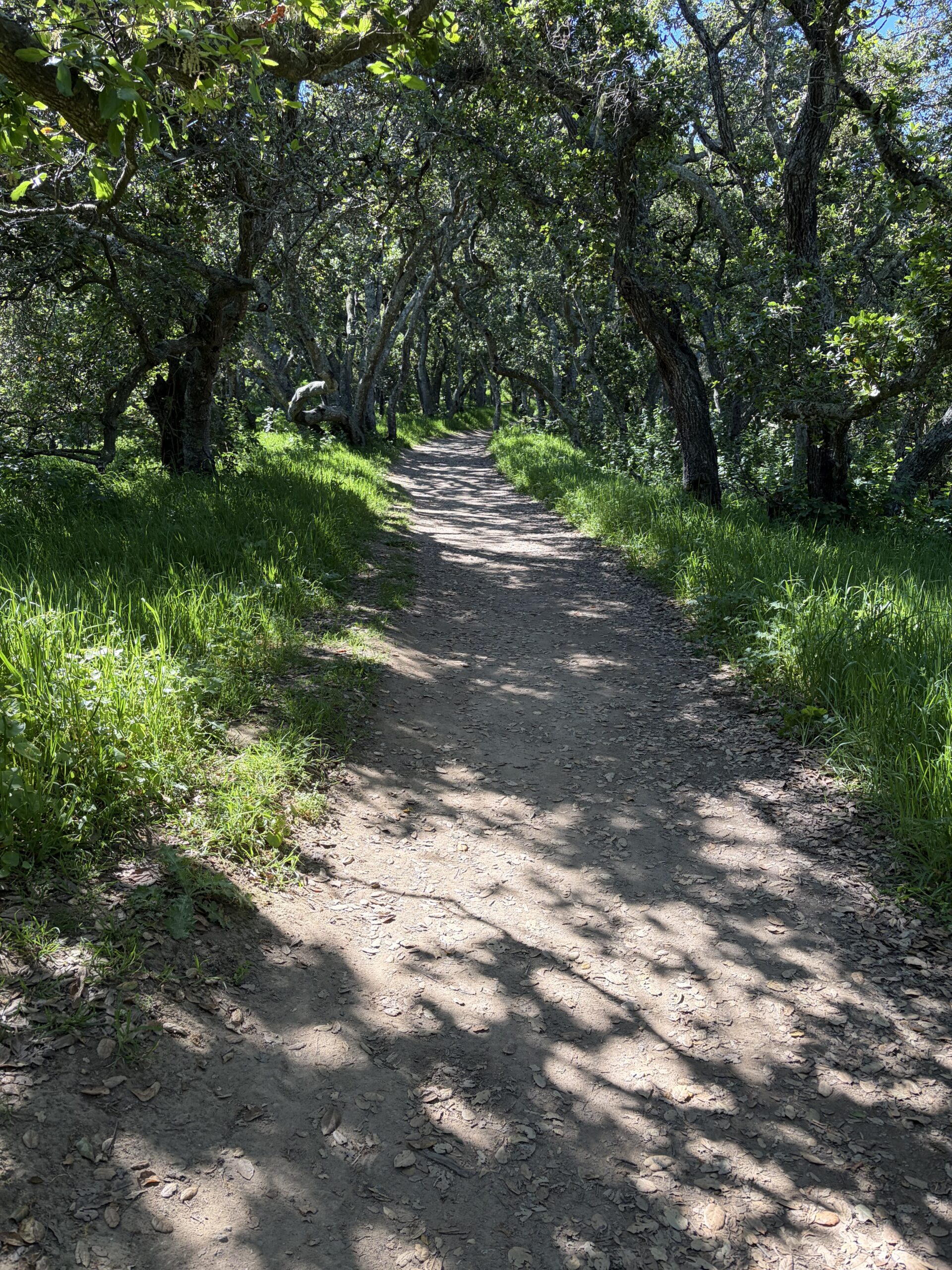
Yesterday I was out hiking on the trail pictured here and I remembered what my neighbor said when I asked her where she experienced belonging. She said, “outside, when I’m walking in nature.” I remember thinking: what? Of course. I had been anticipating the conversation moving toward people, which family, which friends, which community gave her that sense of connection. She surprised me completely. Since then, I’m a little more able to feel the breeze on my face or, of all things, smell the air. I’m getting a little better at soothing my loneliness, which is a good step, more ahead.
I read a lot and in 2023 came across research noting that Vivek Murthy, the U.S. Surgeon General at the time, declared loneliness as a public health crisis. This epidemic may be a little bit hard to think about as it is not simply the absence of close family or the lack of a caring friend. It is more profound and insidious, rooted in the larger, cultural pattern of modernity that places so much important on the individual. This individual has become alienated from the natural world but also divided from a traditional community, losing the meaningful social roles that often arose from such a community. What if this is why we turn against one another, part of the fodder for the culture wars?
When we lose our sense of belonging to place and community, we are naturally frustrated, which we could take out on ourselves in depression or find convenient others toward whom we direct our grievances. We also naturally look for answers, which we can problematically find in authoritarian leaders or politically correct rhetoric. Or, put simply, we find belonging when our tribe is looking, and finding, bad guys. These are belonging’s shadow images. The hunger they exploit is real.
This tendency toward blame and projection is where the psychological and the political converge for me. The path toward a more just and functional public life cannot be paved with argument and blame alone. It is built up of restored connection: to ourselves, to the people immediately around us, and then, gradually, outward. My neighbor didn’t set out to teach me political theory. She just told me where she felt at home. Isn’t that where everything begins?
How will we keep this in mind while we’re also trying to work out political solutions? Or is it even possible to care about our communities if we haven’t tended to our own experience of belonging?
In my next blog, I’ll tell you a little bit about the groups I convene and how I see these as always beginning with belonging, which creates the opportunities to support one another to find a natural direction to serve our families, neighbors, and, likely, our communities as well.